



Popular Guides


Frequently Asked Questions
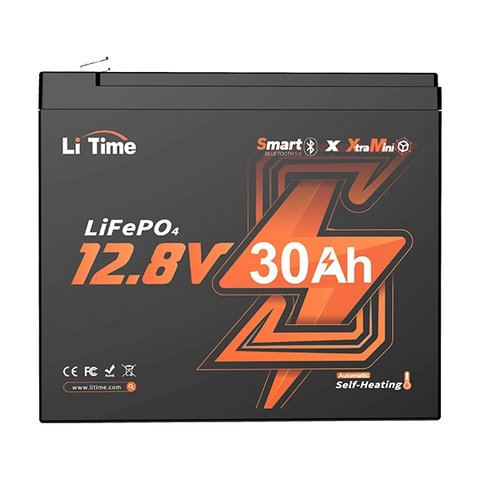
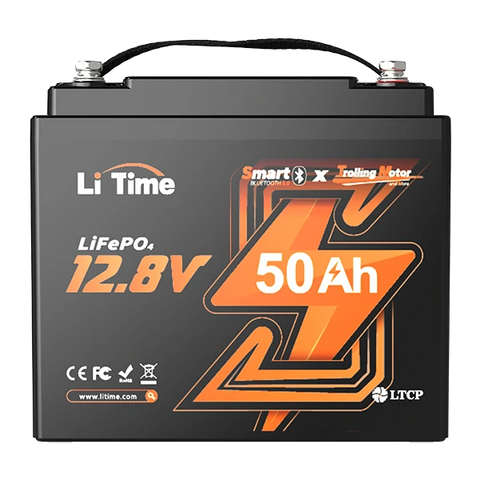
A marine battery is a power storage device designed for boats and other watercraft. Depending on its design, it may start an outboard engine, run a trolling motor, power fish finders and navigation equipment, or support lights and other onboard loads.
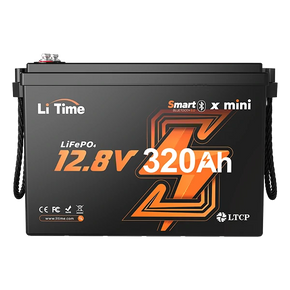
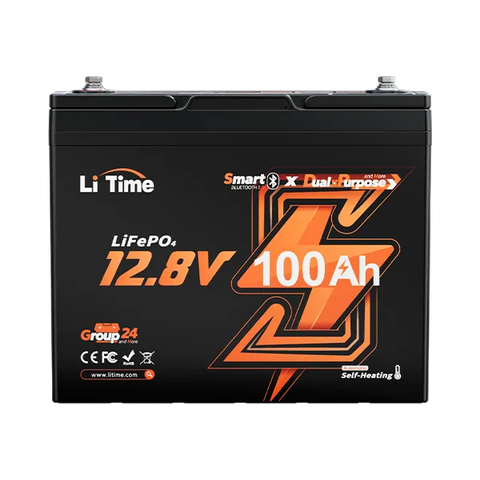
Marine batteries are generally divided into starting, deep-cycle, and dual-purpose types. LiTime offers dedicated options for trolling motors, electric outboards, fish finders, marine starting systems, and onboard power, so it is important to choose a battery designed for the intended application.
“Lithium ion marine battery” is a broad term covering several lithium battery chemistries. LiFePO4, or lithium iron phosphate, is one specific type of lithium-ion chemistry.
LiFePO4 marine batteries are commonly chosen for their stable chemistry, long cycle life, low maintenance requirements and consistent voltage under load. LiTime marine batteries use LiFePO4 cells together with a built-in battery management system, or BMS, to monitor and protect the battery.
A marine starting battery delivers a short burst of high current to start an engine. A deep-cycle marine battery is designed to supply steady power over a longer period and is normally used for trolling motors, fish finders and onboard electronics.
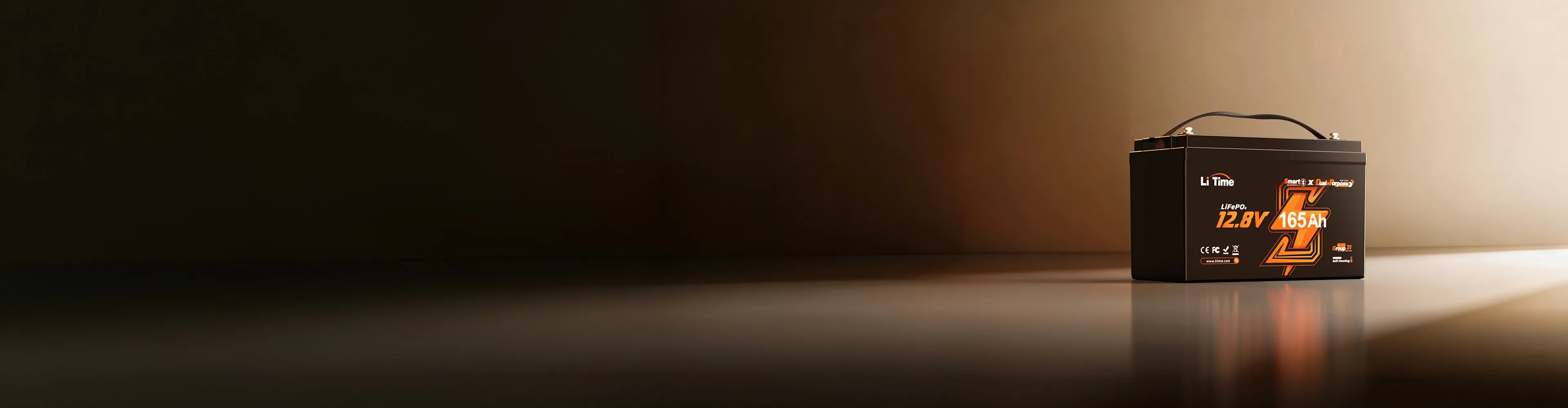
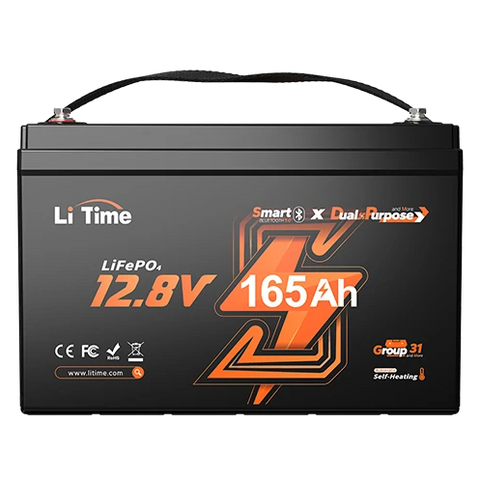
A dual-purpose marine battery combines starting capability with deep-cycle energy storage. For example, LiTime currently offers a 12V 165Ah Dual-Purpose Smart Self-Heating model rated on its product listing for marine starting and deep-cycle use.
Do not use a standard deep-cycle lithium battery to start an outboard unless the battery is specifically identified as a starting or dual-purpose model and meets the engine manufacturer's MCA, CCA and charging requirements.
A LiFePO4 lithium ion marine battery is generally lighter, provides more usable capacity, maintains a steadier voltage and offers a longer cycle life than a comparable lead-acid battery. It can also charge more efficiently when paired with the correct charging equipment.
However, lithium batteries usually have a higher initial price and require compatible chargers, controllers and onboard electrical systems. The better option depends on the boat, budget, operating temperature, weight limits and required runtime.
A compatible 12V marine battery can power:
- A 12V trolling motor
- Fish finders and sonar equipment
- Navigation electronics
- Boat lighting
- Communication equipment
- Pumps and other onboard accessories
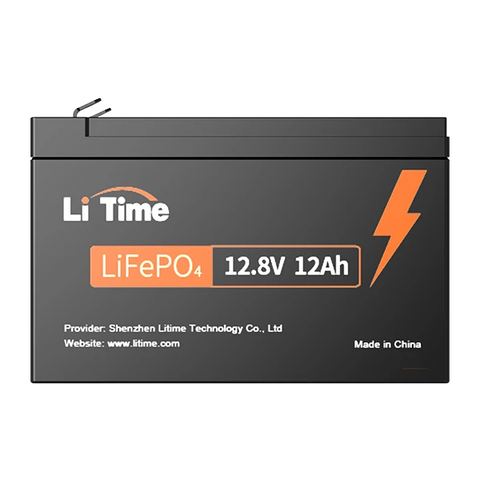
Actual compatibility depends on the battery capacity, BMS continuous-discharge rating and the equipment's starting and operating current. A 12V deep-cycle battery should only be used to start an outboard when the model is specifically rated for marine starting.
Yes, a 12V marine battery is suitable for trolling motors that require a 12V electrical system. These systems are commonly found on kayaks, canoes, jon boats, skiffs and smaller fishing boats.
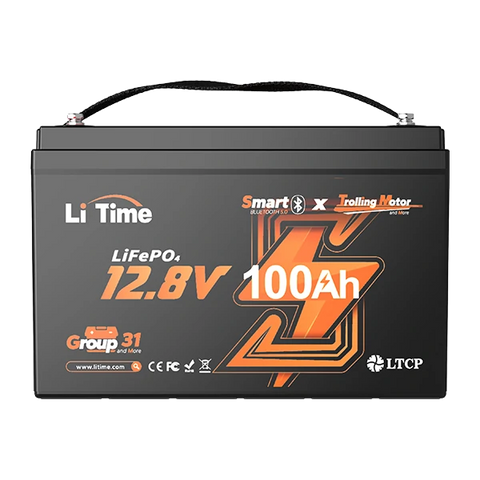
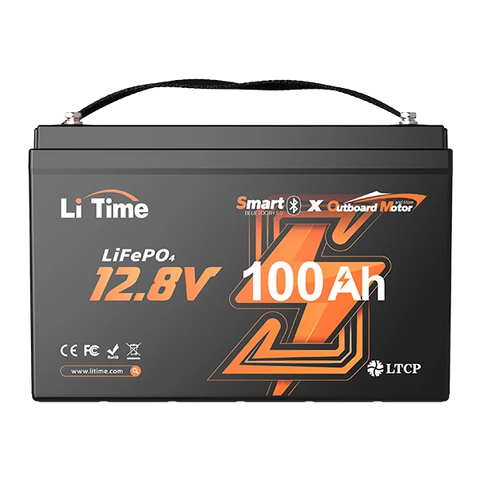
For example, LiTime identifies its 12V 100Ah Trolling Motor Battery as suitable for 30–70 lb thrust trolling motors. However, the correct battery also depends on the motor’s maximum current, average operating speed, boat weight and desired runtime. Always confirm the voltage and current requirements in the trolling motor manual.
Runtime depends on average current draw rather than the motor's maximum current rating alone. A simple estimate is:
Runtime(hours)≈Battery capacity(Ah)×usable capacity/Average current draw(A)
For example, if a 12V 100Ah LiFePO4 battery provides approximately 90Ah of usable capacity and the trolling motor draws an average of 20A:
90Ah/20A=4.5 hours
This is only an estimate. Motor speed, wind, water current, boat weight, temperature and additional onboard loads can significantly change actual runtime.
The useful life of lithium marine batteries depends on the specific model, depth of discharge, charging rate, operating temperature, storage conditions and frequency of use.
LiTime lists thousands of cycles and an approximately 10-year design life for a number of its LiFePO4 batteries. Some LiTime product listings state 4,000 or more cycles at 100% depth of discharge, but this specification should not automatically be applied to every marine model.
Check the individual product page or manual for the model's cycle-life conditions. Avoiding excessive heat, using an approved charger and following the recommended storage practices can help extend battery life.
The best marine battery depends on six main factors:
- Required system voltage
- Motor or equipment current draw
- Desired runtime
- Starting or deep-cycle application
- Battery compartment size
- Charging-system compatibility
Choose a deep-cycle marine battery for trolling motors and sustained onboard loads, a marine starting battery for starting a compatible outboard, or a dual-purpose battery when both functions are required.
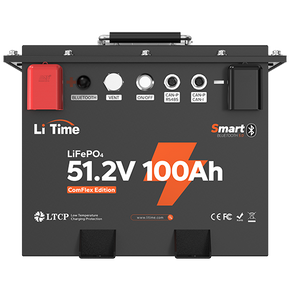
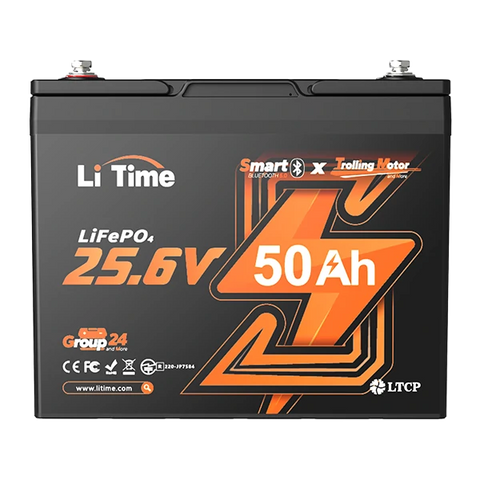
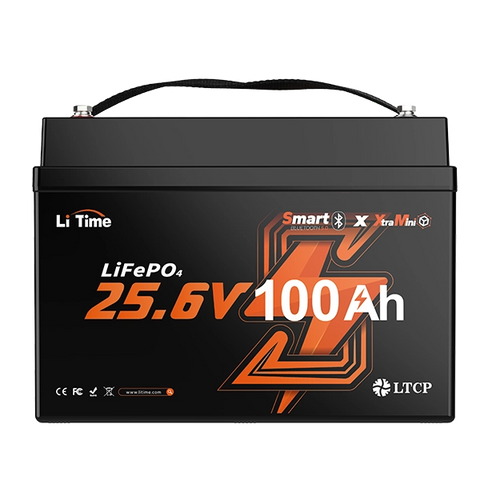
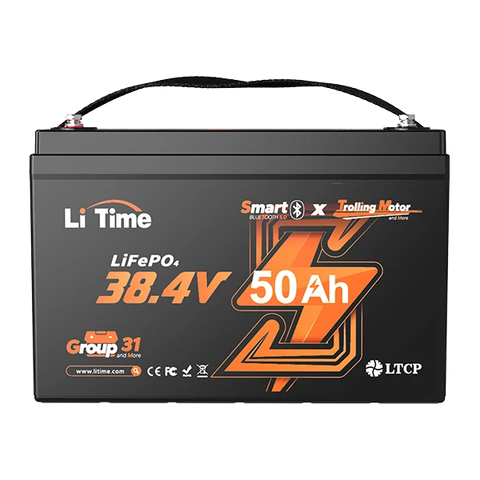
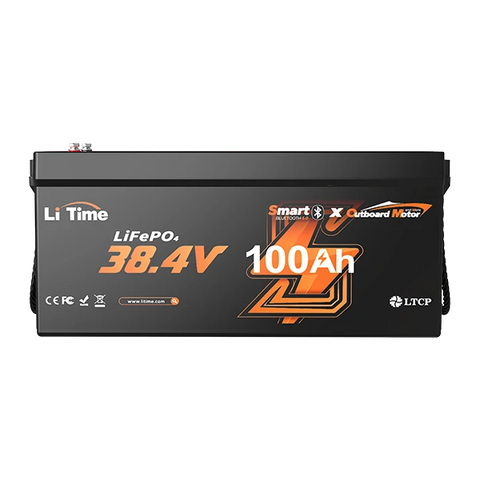
LiTime offers 12V, 16V, 24V, 36V and 48V marine battery options. Selected models also include Bluetooth monitoring, low-temperature charging protection and self-heating. Always match the battery voltage and discharge rating to the motor or equipment manufacturer's requirements.