




When setting up and using a solar battery system, selecting the right inverter is a critical issue. When choosing an inverter, many people may wonder: How can I select an inverter to ensure the smooth operation of my entire power system?
To ensure the smooth operation of the power system, it is essential to understand the role of the inverter in the power system and the nature of various electrical appliances in daily life. This article will discuss the role of inverters in power systems and inverter selection principles. We will also provide a comprehensive understanding of the differences between resistive loads, capacitive loads, and inductive loads, as well as how to choose suitable inverters when operating different types of loads.
1. The Role of Inverters in Power Systems
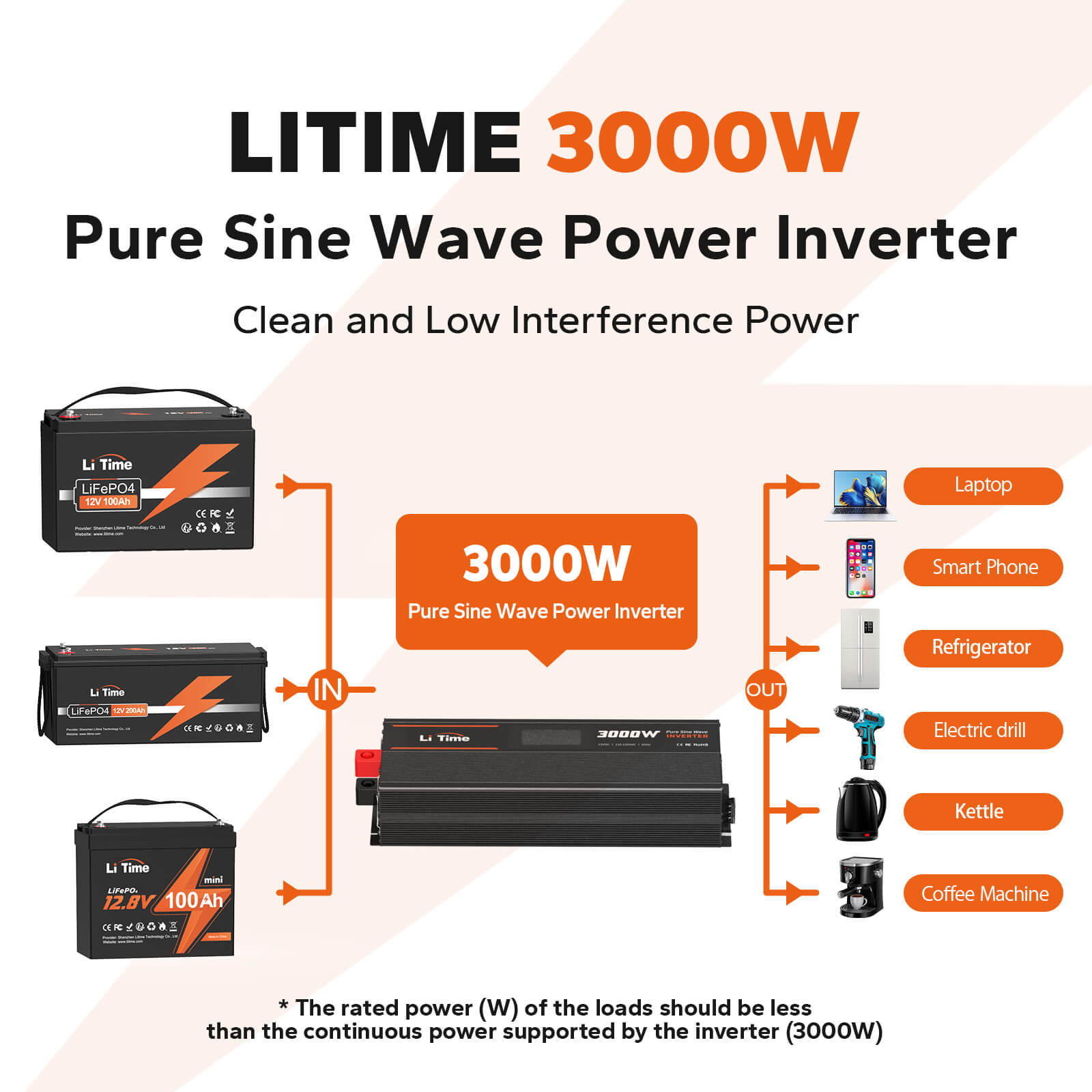
The main role of an inverter in a power system is to convert the direct current (DC) output from batteries into alternating current (AC) to meet the power needs of AC loads. It also ensures the quality and stability of the output power and protects the safety of batteries and load equipment. Specifically:
- DC to AC Conversion: Converts DC power generated by the battery system into AC power, enabling AC-dependent devices such as TVs, refrigerators, and air conditioners to operate normally under battery system power supply.
- Stable Output: Provides pure sine wave AC power to ensure utility-grade power output, offering stable and reliable power to loads and preventing damage to equipment caused by voltage fluctuations and unstable frequency.
- Protection Functions: Equipped with protection functions such as over-current, over-voltage, under-voltage, over-temperature, and output short-circuit protection. When abnormalities occur in the battery system, it promptly cuts off the circuit to protect the product itself, batteries, and load equipment from damage.
- Power Quality Optimization: Reduces the harmonic content of the output AC power, improves the power factor, and provides an output efficiency of over 90%, enhancing the overall efficiency and stability of the power system.
2. Explanations of Three Load Types in Power Systems
Load types in power systems can be broadly divided into three categories: resistive loads, capacitive loads, and inductive loads. Below are explanations of the meanings, functions, and real-life applications of these load types.
2.1 Energy Conversion and Consumption
- Resistive Loads: Resistive loads mainly convert electrical energy into heat, light, etc. The output power of such loads is close to their standard rated power, so inverters can be selected based on their rated power.
- Inductive Loads: Inductive loads refer to devices containing a large number of coils and inductive components. When starting such devices, energy must first be stored in the inductive components, and additional energy is required to start the internal motor. Therefore, the energy required during startup exceeds the device's rated power. If the startup power exceeds the inverter's peak power, the device may fail to start.
- Capacitive Loads: Capacitive loads are devices with a large number of capacitive components. During startup, energy must first be stored in the capacitive components, and energy is also required to start the internal motor. Thus, the energy required during startup exceeds the device's rated power, and higher peak power is needed for successful startup.
2.2 Common Examples of Three Load Types in Daily Life
- Resistive Loads: Common resistive loads in daily life include electric water heaters, electric ovens, and heating coils. These appliances generate heat through resistance, converting electrical energy into heat to provide convenience in daily life.
- Inductive Loads: Motors are the most typical inductive loads, such as air conditioners, washing machines, and refrigerators at home. These devices require more power during startup than their rated power.
- Capacitive Loads: Common capacitive loads include transformers and X-ray machines, which also require more power than their rated power during startup.
3. Inverter Selection Principles
3.1 Voltage Matching
When selecting an inverter, ensure precise matching between the inverter's input/output voltage and the power supply and load voltage. The inverter's input voltage range must accurately match the output voltage range of the power supply (such as battery packs or solar panel arrays). For example, for common 12V, 24V, or 48V DC power supply systems, select inverters with corresponding rated DC input voltages.
Visit LiTime Full Range of Pure Sine Wave Inverters for your power system.
3.2 Load Power Considerations
Starting Power and Peak Power: When selecting an inverter, consider not only the continuous operating power of the load but also focus on its starting power. Inductive loads generate several times the normal operating current at startup, resulting in extremely high starting power that may exceed the inverter's rated power.
At this point, the inverter will output peak power higher than the rated power. However, the peak power cannot be sustained indefinitely. If the inductive load is not fully started within the peak power duration, the inverter will activate overload protection to avoid damage. Therefore, it is recommended to choose an inverter with a higher rated power when using inductive loads.
4. Power Parameters of Common Electrical Appliances and Inverter Selection
Different electrical appliances have varying load characteristics, with differences in required starting power and continuous operating power. The following table presents power parameters of common appliances and recommended inverter power ratings.

Note: Due to structural differences among appliances of different brands and power ratings, and since the starting power and duration of electrical equipment may vary by manufacturer, this table is for reference only.
5. How to install battery inverter?
To install a battery inverter in an RV, start by cutting off all power, then mount the inverter close to the RV battery bank, ground it properly, connect the DC cables with correct polarity, and test the system before connecting AC loads. Key installation steps:
1. Disconnect all power sources
Turn off shore power, solar input, loads, and the RV battery bank before installation.
2. Choose a ventilated location
Install the inverter in a dry, well-ventilated area. Inverters generate heat, so proper airflow around the intake and exhaust vents helps prevent overheating.
3. Place it close to the battery bank
Keep the inverter near the RV battery bank to reduce voltage drop. If using flooded lead-acid batteries, avoid installing the inverter in the same compartment because of flammable gas risk; sealed batteries such as AGM, Gel, or LiFePO4 are generally safer for shared compartments.
4. Secure the inverter
Mount the inverter firmly before wiring. Use the factory mounting holes and keep the required ventilation clearance.
5. Ground the inverter
Connect the inverter grounding lug to the RV’s common ground point, such as the trailer frame or a grounding bus bar.
6. Connect the DC cables correctly
Connect black negative to battery negative and inverter negative, then red positive to battery positive and inverter positive. Follow polarity markings carefully and never let positive and negative terminals touch.
7. Keep the inverter OFF while wiring
Make sure the inverter is switched off before tightening terminals. Remove terminal caps, attach wire lugs and nuts, tighten securely, then reinstall the insulating caps.
8. Power on and test
Turn on the inverter. If the battery connection is correct, the monitoring screen should light up and the inverter is ready for use.
9. Connect AC devices safely
Make sure both the inverter and the load are switched off before connecting devices to the AC outlets. Avoid turning on the inverter with loads already running, as startup surge may trigger overload protection.
Conclusion
Through the recommended power ratings of common appliances and compatible inverters in this article, you can make more intuitive selections. If you are still unsure about choosing an inverter, please email us at service@litime.com. Our customer service team will help accurately match inverters with loads to ensure the efficient operation of lithium battery power supply systems and maximize their value.
FAQs about inverter
How many batteries do I need for a 5KW inverter?
You typically need at least one 48V/51.2V 100Ah battery, or four 12V 100Ah batteries in series, for a 5KW inverter.
For longer runtime, add more capacity. For example, to run a 5KW inverter at full
load for about 4 hours, you need around 20kWh, which is about four 51.2V 100Ah batteries.
Full Guide: How Many Batteries Do I Need for a 5KW Inverter?
What is the main difference between a 12V and 24V inverter?
The main difference is the system voltage and current demand. A 12V inverter is better for small to medium loads, while a 24V inverter is more efficient for larger loads because it draws lower current for the same power output.
Learn more in the LiTime 12V vs. 24V Inverter Guide.


